
Share
After almost 90 years in Stretford, the Kellogg’s plant is sadly shutting its doors this year.
Like everything, times change and so does technology and the plant is no longer suitable for modern manufacturing. Production is moving to Wrexham and the plant will cease production in Autumn 2026.
After hearing the news we wanted to share a bit about what Kellogg’s means to us and a slice of its history and influence on the area.
What Kellogg’s means to us
As a Mancunian firm, with an office in Trafford Park and our founder living in Stretford, Kellogg’s is very much a part of our community. It has provided employment and commerce to the area for generations and we’ll be sad to see them go.
Karen, our Managing Director, says Kellogg’s is “iconic” and the smell of cereal (and some days chocolate) is a welcome part of the atmosphere and provides a feeling of “home”. Karen commented that when cruising abroad she was warmed to see the familiar Kellogg’s cereal that may well have been produced in the factory back home. Karen had a funny story to share too. “Once my husband and son were lost in the car and they spotted a Kellogg’s truck. Out of desperation they decided to follow it in the hope that it would lead them home, and it did!”.
Becky, our marketing manager, shares “Local cats love Kellogg’s because they love catching mice that hang around the green spaces outside the factory. A few cats ended up locked in a (non food) storage area onsite because they had ventured in. Kellogg’s had to put up signage asking staff to check for cats before locking up. It’s quite funny really!” she continues to say “Kellogg’s have always had a respect for their community and that’s something you don’t often hear about with international brands.”
So why did Kellogg’s pick Stretford for a cereal plant?
Kellogg’s began their journey in the USA in 1906 and more or less created the industry of breakfast cereal. Fast forward a number of years and Europe started buying their products, and they didn’t want to lose that trade to war.
“We guessed there was going to be a war in Europe – the signs were there to read” – Former Production Manager of Kellog’s commented. “ This could have well cut off the plant’s output so the only way to protect the company’s wider interest was to serve the market direct.”. *
That was it. Kellogg’s needed a space to produce in Britain. But where?
At that time Trafford Park was an industrial machine with the ship canal, the Bridgewater canal, and train links, meaning it could ship in and out with ease. It also had, within 75 miles, a bigger employment pool, and a good cereal market; larger than London at the time. They didn’t consider that its hive of industry also made Trafford Park a target for air-raids. But that’s another story.
The plant cost £500,000 and took just 10 months to build, which is an incredible feat. In a time before ready mix concrete they erected 8 huge silos in just 10 days! There was a lack of steel at the time which meant that they had to get creative. Kellogg’s upcycled railway truck axles and as a result became one of the first projects in Britain to apply high-tensile steel for strengthening concrete.
See a piece of Kellogg’s History
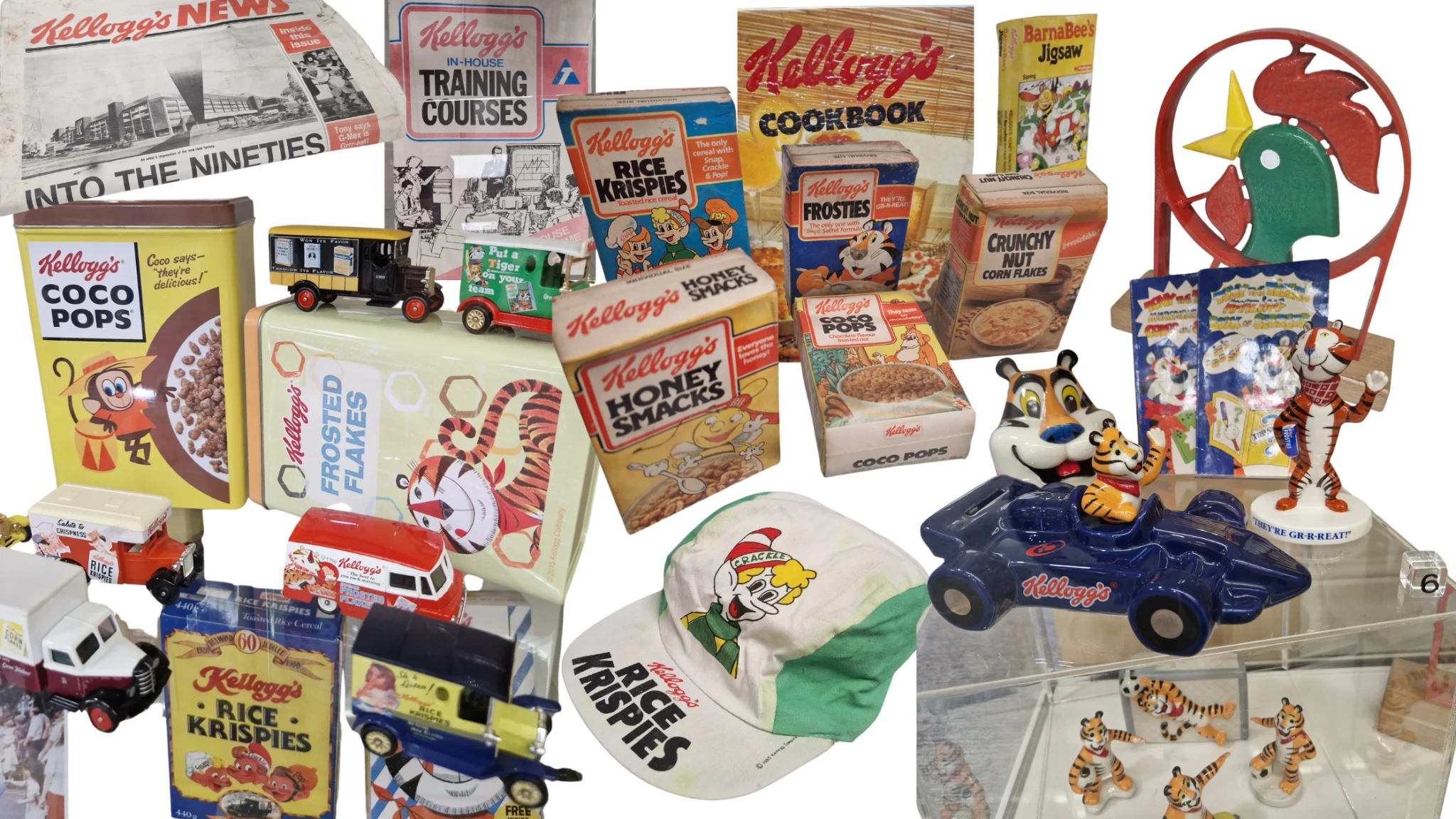
Becky went to visit The Kellogg’s Exhibition at the Trafford Local Studies and Archives Centre in Sale. There were a number of interesting displays including memorabilia, uniforms, a cut out of Tony the Tiger, and even an old fashioned shop.
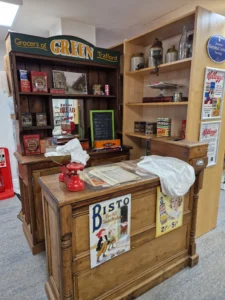
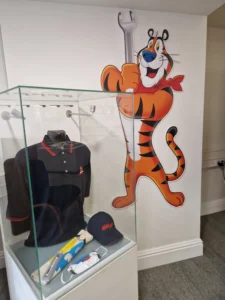
The exhibition is now closed but the St. Anthony’s Centre on third avenue in Trafford Park have a Summer Exhibition.
A final goodbye
We will miss you Kellogg’s. Thank you for being a part of our community for so many years.
Sources
* Kellogg’s – 50 Years of Making Sunshine – 1988
https://www.trafford.gov.uk/news/2026/new-exhibition-celebrates-kelloggs-trafford-park-legacy